The emotional geography of Iskander Moon's Salt Moon City
When I listened to Iskander Moon for the first time, I immediately felt an affinity with his themes. Berlin, America, travel... I knew what he was talking about, and I felt the same way. After the EP Are You Lost Here? Iskander is ready for a real album. Iskander Moon's Salt Moon City is out on February 20, and for the occasion I had the honor not only of listening to it in preview, but also of talking about it with him in person, in Brussels. The title “Salt Moon City” already contains the keywords for interpreting the album.
Where does the title come from and why does the moon recur both in the album and in your stage name?
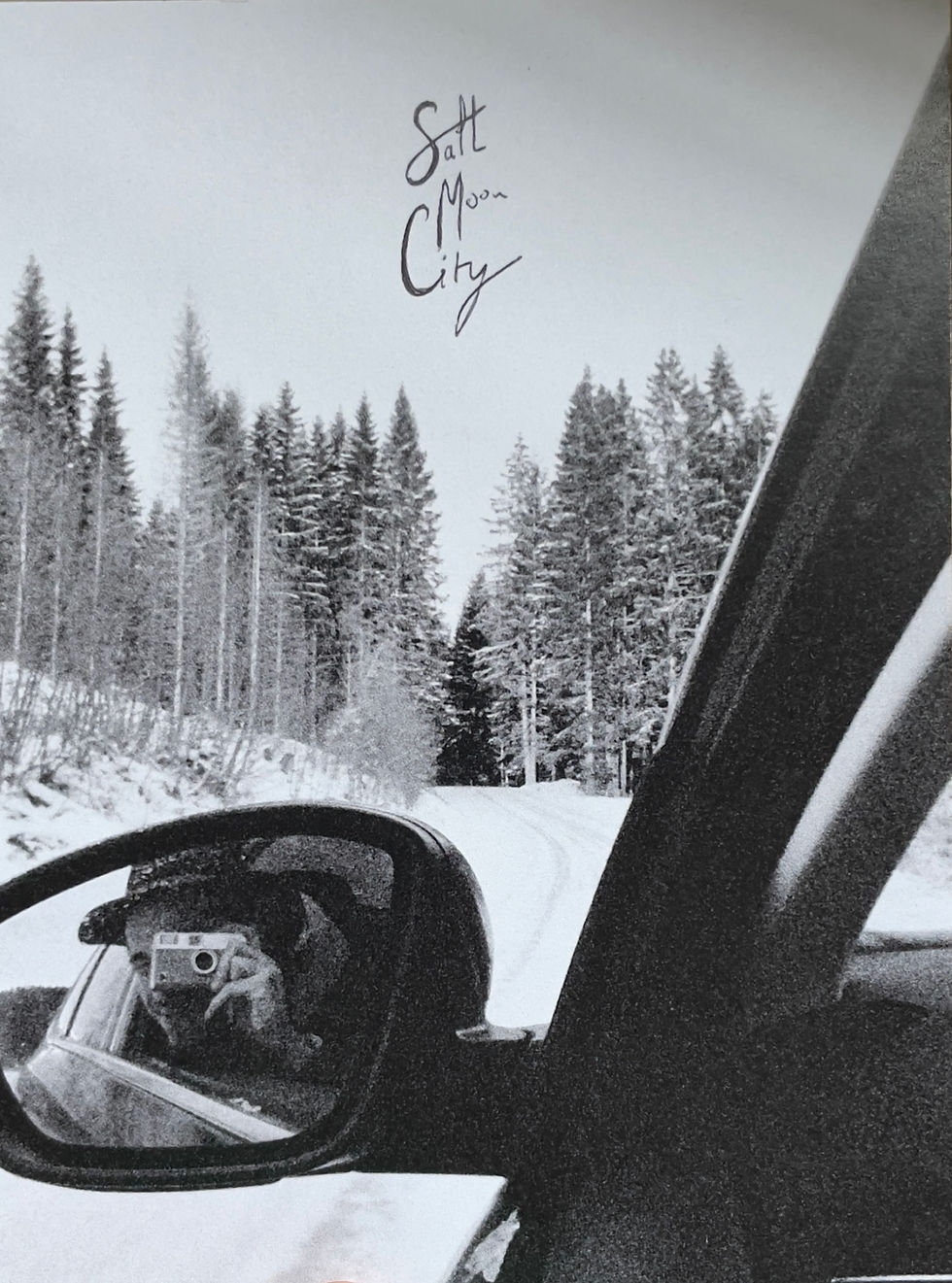
The connection with the moon is primarily due to the assonance with my real surname (Moens, ed.), and then it is an element that unites us all. It represents something that moves us inside and keeps everything in balance. The rest of the title is linked to my hometown. I come from a small village in Belgium on the border with the Netherlands (Zelzate, ed.), that was once used as a salt reservoir, hence the name. Salt Moon City is a bit like my city, it represents my origins, but it becomes the city of anyone, whether it takes shape or is not yet born. In my head, I imagine myself as a radio host narrating the stories of this small town (laughs). The entire album is my coming-of-age story, both as a collection of works and as personal growth, and a hymn to lonely, searching souls. It's a universal journey. The idea for the title came to me during a trip to Sweden. I rented a car and a cabin in the middle of the forest, and there, in the snow, Salt Moon City came to me.
Speaking of cities, I know you've traveled a lot and cities are an important element in your songs. Do you have a favorite? How does all this traveling spill over into the album?
Berlin. I lived there for a couple of months and it's definitely my favorite. The whole album is dedicated to a more or less imaginary city, but there's also New York and Beverly Hills. All places I've been to and that have inspired me. For me, every city has a different tempo, all its own. It's the rhythm with which people live it and the pace it conveys when you experience it firsthand.
And what is the tempo of Brussels?
Brussels is fast in the head but slow in the feet. Berlin has a much slower rhythm, which conveys patience and care. People take special care of each other. Manhattan and Brooklyn, for example, have two very different tempos, one very fast and the other more relaxed. I wrote a song on the album about this. I thought of New York City, 22 when I was crossing the city by train from Manhattan to Brooklyn. Halfway through the song, there's a change of tempo, which slows down as you enter Brooklyn. If you listen carefully, you can hear the train tracks slowing down.
What's different about this album compared to your previous work?
I definitely played around a lot more with trumpets and strings. I dared more with the groove compared to the classic acoustic piano-voice style of my previous work. And then the theme of cities is much more present.
Let's take a look at the tracklist together.
Yes, there are 10 main tracks and 2 intro/outro tracks. I wrote Lonely Days Will Come on the first day of lockdown in 2020. I created, recorded, and released it on the same day. Ghosts represents the inner darkness we all have, but it's more of an encouragement to be honest with ourselves and acknowledge that part of us that we often keep hidden. I wrote Borderline in Berlin. It's about belonging and homesickness. It's literally a borderline, physical but also emotional. After the blues of Tear You Up comes Avé, which is someone's name, and then The City, which sings about people looking for connection while living in different cities. Buried in Beverly Hills is basically about the idea of fame, which doesn't matter much if you don't really have someone by your side to support you. The last one, Minnesota Wildflower, is about a girl from Minnesota I met in New York. It's the typical story where you meet someone while traveling and then never see them again. Those impromptu, intense connections you only have when you travel. I drafted the song on a late night right after I came back home. I instantly knew I had the closing track.

As Iskander and I talked, several images flashed before my eyes. Between coffees, I saw a small remote house in the snow, a river marking the border between two countries, a city that never sleeps. When he talked about lonely souls, I saw a tarot card. During our chat, I was in many places, and my personal story made me sensitive to his songs. Iskander set to music the same emotional geography that Italo Calvino wrote about in his book Invisible Cities, describing elsewhere as a negative mirror, and each new city as a web of foreign places that constantly remind us of what we are no longer. “If I tell you that the city I am traveling to is discontinuous in space and time, now sparse, now dense, you must not believe that we can stop looking for it.” Look for your Salt Moon City, and you may find that it has always been there. Iskander Moon’s Salt Moon City is out today, Friday, February 20, and I highly recommend listening to it. You will love it.